
HXS Slim Series - Pictogram LED Exit Sign
First IEC 62034 Automatic Test in HK
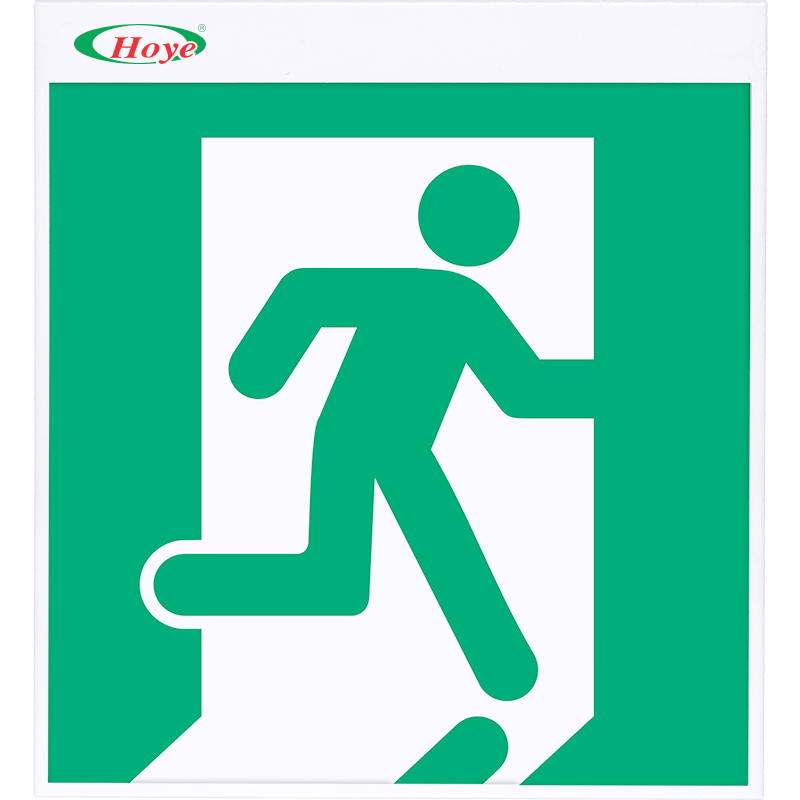
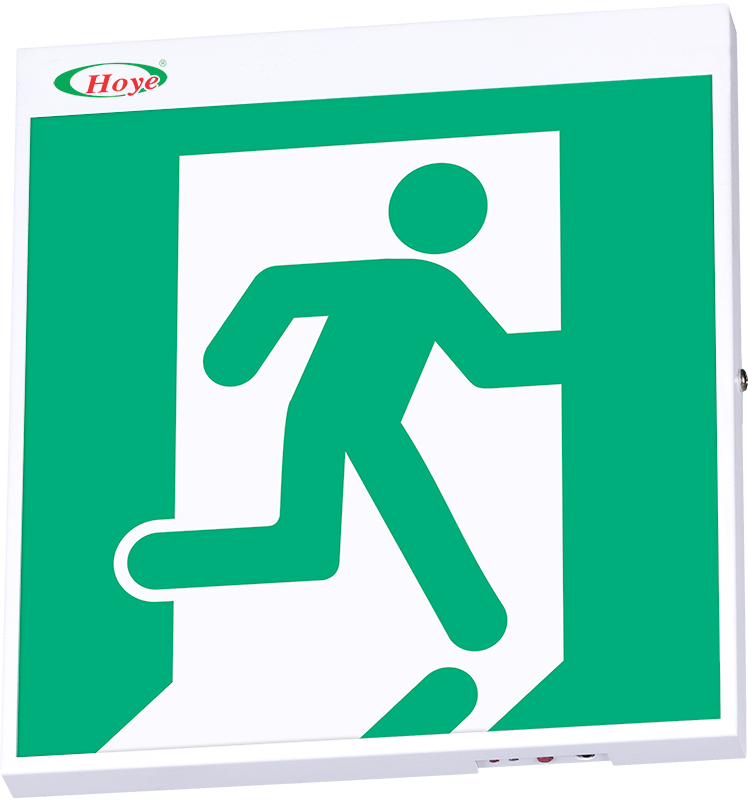
Features
- IEC 62034:2012 automatic test system for HK FSD requirements
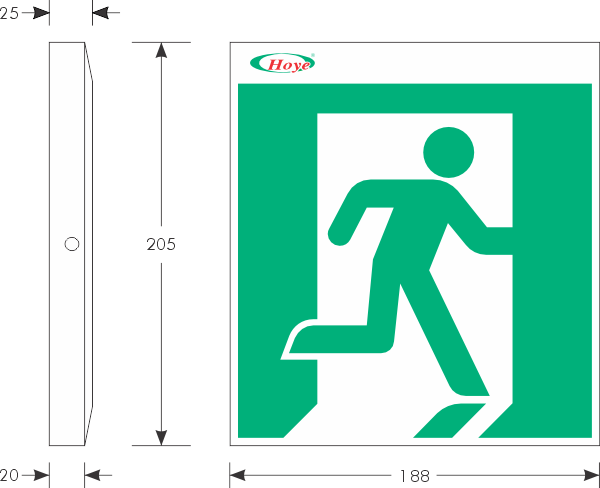
- Slim design with 4 mm bezel and 20 mm thickness
- Nichia LEDs with 15 years life at L70
- System power only 2 W
- Full solid-state design — no mechanical relays
- Constant brightness control for AC and DC operation
- Chemistry-aware charging for LiFePO4, NiCd and NiMH
- Precharge recovery for deeply discharged batteries
- Thermal charge protection with automatic resume
- Deep-discharge shutdown for battery protection
- Isolated low-voltage test switch
- Infrared remote for brightness control, changeover test, and Autotest
- Dual LED system status indication (optional LCD status module)
-
Optional fire alarm input flashes the LED in response to external fire alarm signals
-
Optional Wi-Fi connectivity enables centralized control and reporting of status, faults, and self-test results
Electrical Characteristics
| Rated supply voltage | 220-240 VAC (-20%, +10%) |
| Supply frequency | 50-60 Hz |
| Circuit power | < 3W |
| Changeover time | <0.5 sec |
| Recharge time | < 6 hrs |
| Rated discharge time | 3 hrs |
| Lumen Maintenance (L70) | 15 years |
| Ambient temperature (ta) | 0 ... +50°C |
| Max. temperature rise (Δt) | < 5°C |
| Battery type | LiFePO4, NiCd/NiMH as option |
| Luminance | 250 cd/㎡ max |
IEC 62034 Automatic Test
According to HK FSD, Technical Guidance May 2021 and FSD Circular Letter No. 5/2021, PPA/104(A), 5th Revision, emergency lighting with self-contained batteries shall be inspected periodically. For automatic testing devices, it shall be designed in accordance with IEC 62034:2012 - Automatic test systems for battery powered emergency escape lighting.
These inspections are normally carried out by hand and entered into a register. An automatic test system performs the same checks on schedule and keeps the results in the fitting, so the records are always ready for inspection.
The firmware supports full IEC 62034 - ATS Type S, so each sign tests and records by itself with no central controller or extra wiring.
| IEC 62034/BS EN 50172/FSD Requirements | Automatic Test |
| Commissioning Testing | ✅ |
| Maintenance | |
|
a. Once every month a functional test in accordance with BS EN 50172 not longer than 10% of rated duration should be carried out. |
✅ 30 sec |
|
b. Once every twelve months a full rated duration test, should be carried out and the results should be entered in a register. |
✅ |
|
c. The luminaire should be functioning properly to maintain the stipulated lighting level and the normal power supply should be restored after the test. |
✅ |
|
d. If automatic testing devices are used, the above item a – c should be complied with. |
✅ |
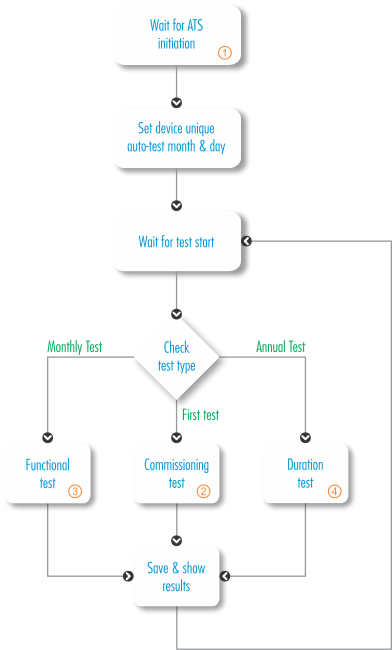
Automatic Test Flowchart
HXS built-in automatic test system performs three types of self-test to verify functionality and reliability without manual intervention. Testing starts automatically after 7 days of uninterrupted mains supply. A random delay per device staggers the tests so adjacent fittings do not test at the same time.
Functional test — performed once a month to check basic functionality, including hardware parameters such as voltage and current readings. Test duration is 30 seconds.
Duration test — performed once a year. It runs the same checks as the functional test, followed by a battery life check with a full discharge at rated load.
Commissioning test — the first duration test, typically performed after the device has been installed and configured.
During every test the sign runs on battery supply while battery and lamp parameters are monitored.
Logging — Any fault found is saved in the system until the faulty component is replaced.
Years Warranty
Years of LED Life
Watt
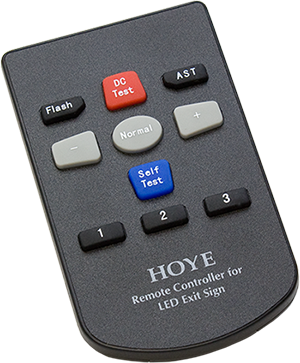
IR Remote Control
The infrared remote makes maintenance easier. Adjust panel brightness, run a changeover test, and clear Autotest faults without opening the fitting.
- Panel brightness dimming in normal operation
- Restore default brightness
- System changeover test (simulates the traditional test button)
- Clear stored Autotest faults after the fault has been corrected
Status Indications
Two LED indicators provide a rich set of status indications for system status and faults. Operators can use the information to quickly identify and diagnose problems.

Normal Status
-
Charging
-
Battery charged
-
Functional test postponed
-
Duration test postponed

Fault Status
- Lamp fault
- Charger fault
- Battery fault
- Battery duration EOL

Compliances
FSD Circular Letter No. 5/2021 Fire Safety Requirements for Emergency Lighting Systems in Licensed/Registered Premises
IEC 62034:2012 Automatic test systems for battery powered emergency escape lighting
BS 5266-1:2016 Emergency lighting – Code of practice for the emergency lighting of premises
BS EN 1838:2013 Lighting applications. Emergency lighting
EN 61347-2-13 Lamp controlgear. Particular requirements for d.c. or a.c. supplied electronic controlgear for LED modules
EN 62384 DC or AC supplied electronic control gear for LED modules. Performance requirements
EN 60598-1 Luminaires. General requirements and tests
EN 60598-2-22 Luminaires. Particular requirements. Luminaires for emergency lighting
EN 55015 Limits and methods of measurement of radio disturbance characteristics of electrical lighting and similar equipment
EN 61000-3-2 Electromagnetic compatibility (EMC). Limits. Limits for harmonic current emissions (equipment input current ≤ 16 A per phase)
EN 61000-3-3 Electromagnetic compatibility (EMC). Limits. Limitation of voltage changes, voltage fluctuations and flicker in public low-voltage supply systems, for equipment with rated current ≤ 16 A per phase and not subject to conditional connection
EN 61547 Equipment for general lighting purposes. EMC immunity requirements
Dimensions

Emergency Exit Legends
Ordering Information
| Model | Width (mm) | Legend | Illuminated Side |
|---|---|---|---|
| HXS-W2SA | 188 | A | Single |
| HXS-W2SB | 188 | B | Single |
| HXS-W2SC | 188 | C | Single |